
The DSM, the manual used to diagnose Autism and other mental health experiences, is a colonial tool. In what we call the USA, therapists are expected to use the DSM to pathologise people with mental health disorders. In reality, our mental health is a much more complicated and dynamic state of being — it is the intersection of environment, body, brain, spirit, and emotion. More often than not, it is our environment that is disordered, that created dis-order in us, and the process of healing is unlearning the internalised and inherited disorder of colonialism. That being said, the DSM has colonised so many human experiences, Autism being just one of them. Autism is this big messy splay of colours, and the DSM zooms in on one of the colours, and says all of Autism is this one tiny piece.
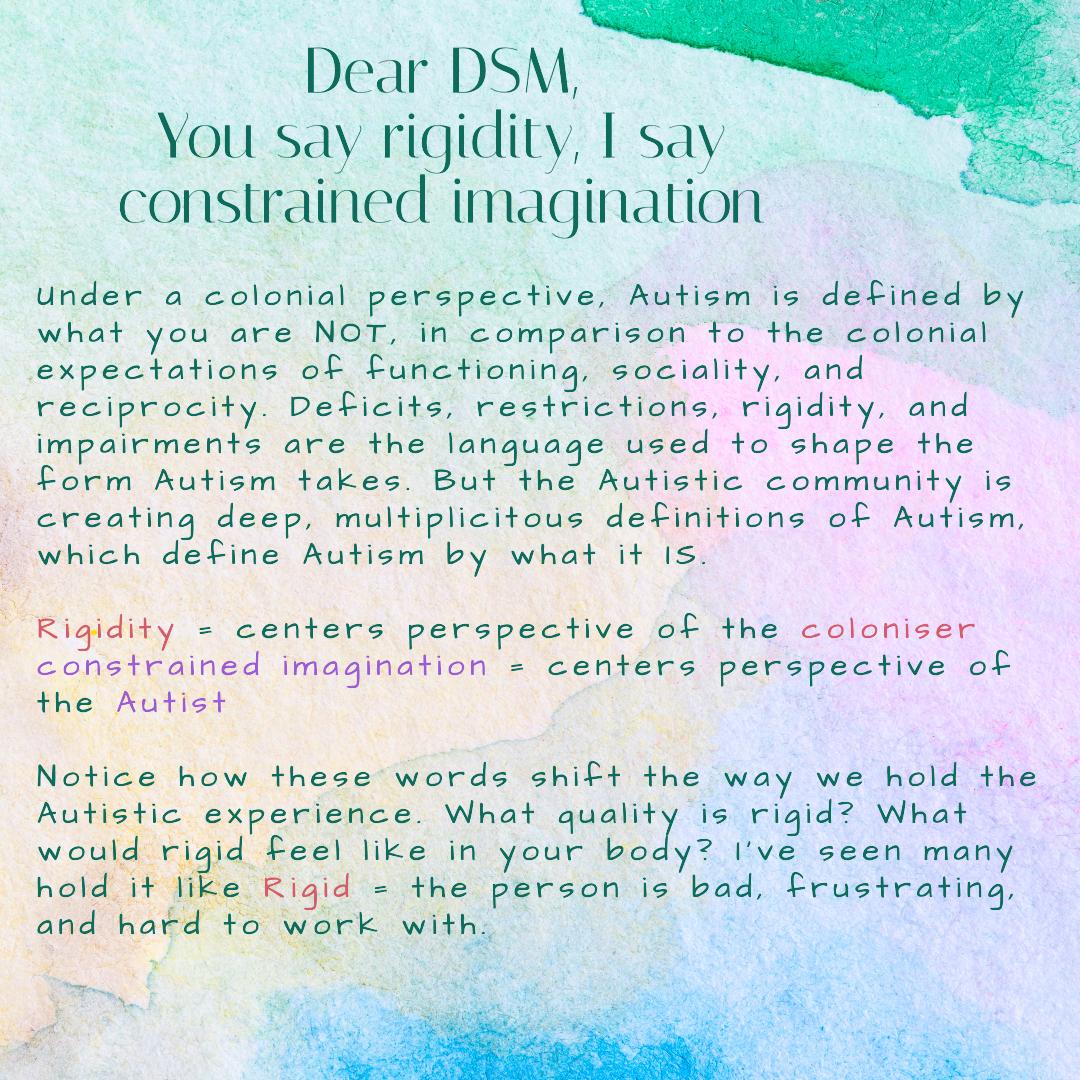
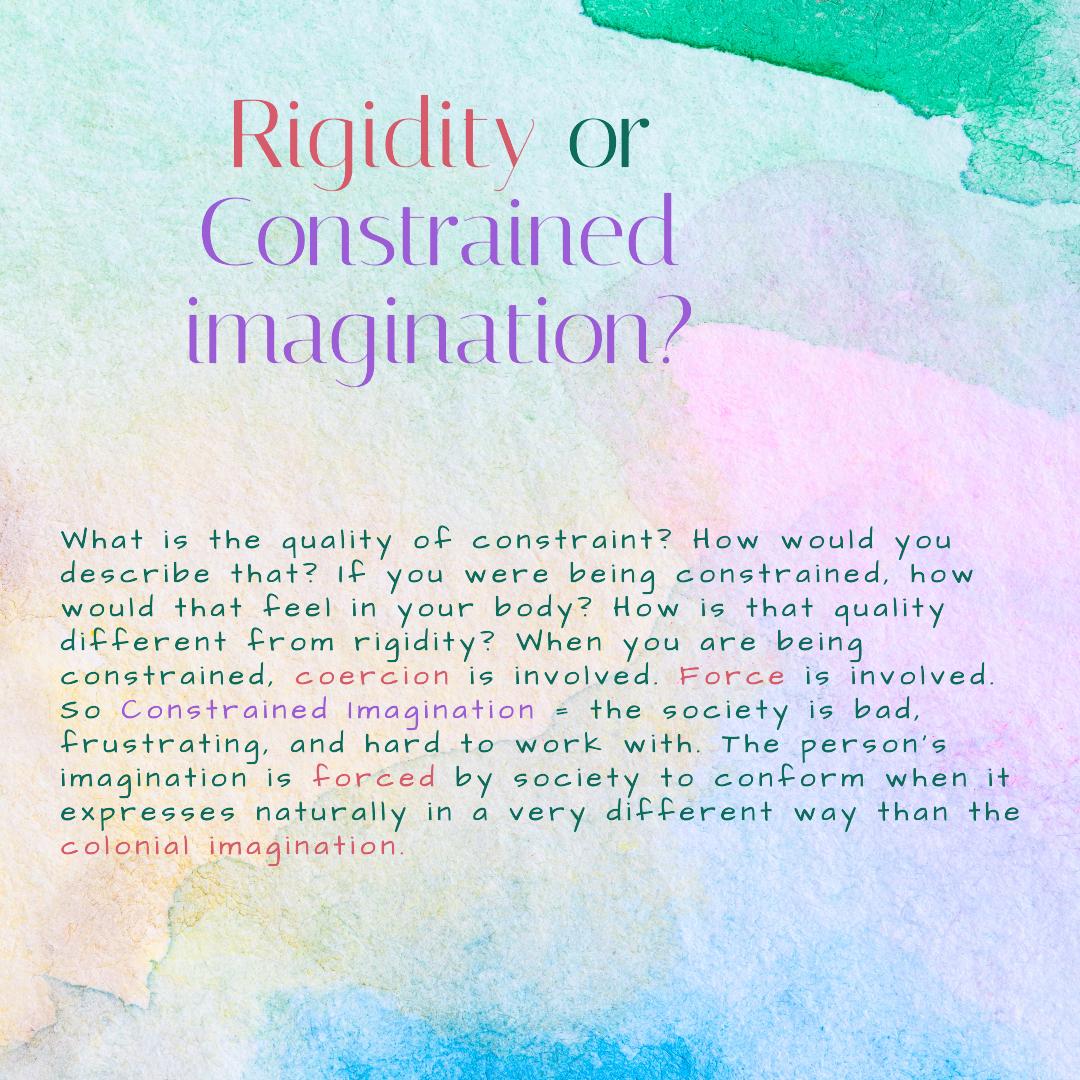
Imagine having such a rigid view of Autism and then having the audacity to call Autists rigid.
I really like how Dr. Nick Walker (she/her) defines Autism:
Autism is a genetically-based human neurological variant. The complex set of interrelated characteristics that distinguish autistic neurology from non-autistic neurology is not yet fully understood, but current evidence indicates that the central distinction is that autistic brains are characterized by particularly high levels of synaptic connectivity and responsiveness. This tends to make the autistic individual’s subjective experience more intense and chaotic than that of non-autistic individuals: on both the sensorimotor and cognitive levels, the autistic mind tends to register more information, and the impact of each bit of information tends to be both stronger and less predictable.
You can read more here: WHAT IS AUTISM? • NEUROQUEER
This is the definition I operate from when working with fellow Autists, whether self-identified or DSM-diagnosed, and so the work I support you in, is unlearning internalised autistiphobia and accepting your Autistic Self, so that you may move closer to embodying love for your glorious Autistic Self. We naturally do not conform to societal expectations, which makes us powerful in the fight to dismantle settler colonialism — if we embody and accept our uniqueness.
 Maverick Joyce Coaching